The Building After the Grant: Capital Awards and the True Cost of Ownership
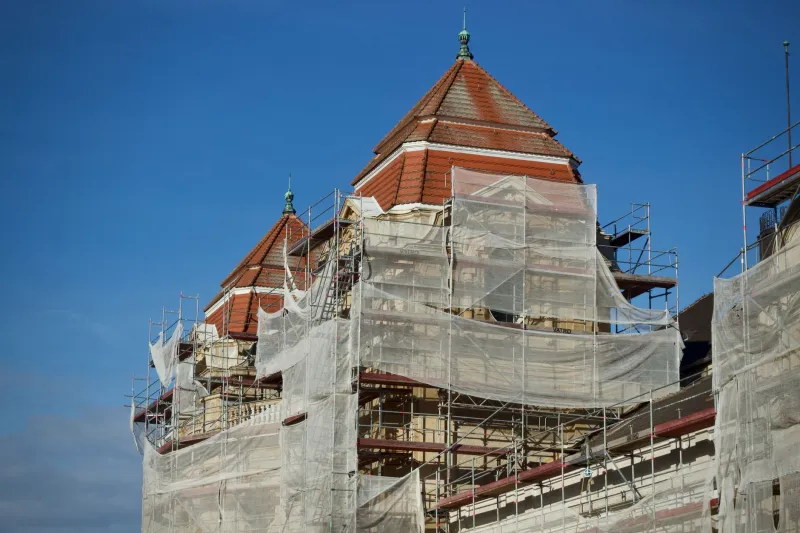
Capital grants occupy a particular place in the ambitions of small UK charities. They promise something visible and lasting: a refurbished community hall, a new roof, an adapted vehicle, kitchen equipment or digital infrastructure. For volunteer-led groups, such an award can feel like a decisive step forward. Yet capital funding is not simply a larger version of a revenue grant. It transfers assets, obligations and risks, and the charity must be able to carry those long after the funder’s final payment has cleared.
For any funder, including Hilton Foundation, the question is not only whether a project is worthy but whether it is sustainable. A capital award may meet the cost of construction or purchase, but it rarely meets the full cost of ownership. Trustees therefore need to look beyond the application form and ask a more fundamental question: can the charity afford this asset over its useful life?
What Makes a Capital Grant Different
Revenue grants pay for activity — staff time, running costs, project delivery. Capital grants pay for assets. They are usually restricted to a specific purpose and often come with conditions attached: match funding, evidence of site control, planning consent, procurement rules and a requirement to retain the asset for charitable use for a defined period. If the asset is later sold or repurposed, the funder may seek repayment.
That makes capital funding less flexible than it first appears. The asset may be valuable on a balance sheet, but it can also create fixed costs that a small charity struggles to meet. The trustees’ task is to decide whether the asset strengthens the charity’s mission or locks it into a financial commitment it cannot sustain.
The Affordability Test
Before drafting an application, trustees should test the total cost of ownership. The purchase price or construction cost is only one line in the budget. Others may include VAT, professional fees, surveys, planning and building regulations, insurance, utilities, cleaning, security, staff time, training, maintenance, lifecycle replacement and eventual decommissioning. For equipment, the charity should also consider servicing, consumables, warranties, software licences and accessibility adaptations.
A whole-life budget covering five or ten years can be revealing. If the charity cannot fund the running costs from existing or planned income, the project may not be viable even if the capital sum is secured. That is not a reason to abandon ambition, but it may be a reason to phase the work, share facilities or seek a different funding mix.
VAT and the Budget
VAT is a common source of unwelcome surprises. Charities benefit from certain reliefs, but they are not a blanket exemption. Construction, renovation, professional fees and equipment may carry VAT at different rates. Zero-rating for certain charitable buildings depends on use and conditions, and professional fees are often standard-rated. If the charity is not VAT registered or cannot recover VAT, the irrecoverable amount must be included in the project budget.
Early advice from a VAT adviser or the charity’s accountant is prudent. A budget that assumes VAT will simply disappear is not credible, and funders will notice. Trustees should also check whether the grant itself is treated as consideration for a supply, and whether any VAT recovery position changes once the building is in use.
Leases, Licences and Control
Capital projects on land or buildings require secure rights. Trustees should understand whether the charity owns the freehold, holds a lease, or occupies under a licence. A short lease may not justify a long-life asset. Landlord consent may be needed for alterations, and repairing obligations or dilapidations can create future liabilities. If the building is leased, the lease should be checked for break clauses, rent reviews, service charges and restrictions on use.
For a community building, security of tenure may matter as much as the capital sum. A new kitchen is of limited value if the charity must vacate the premises in two years. Similarly, equipment installed in a building the charity does not control may be difficult to remove or insure.
Match Funding and Cash Flow
Capital awards often require match funding. Pledges may be conditional, staged or slow to arrive, while contractors expect payment on agreed schedules. The charity may need to pay for work before grant instalments are released. A cash-flow forecast should show when money is needed and when it will be received.
A contingency of 10 to 15 per cent is often sensible for building work, though the right figure depends on the project. Trustees should avoid committing to a project on the assumption that future fundraising will fill a gap. If match funding is not secured, the charity may be exposed to liabilities it cannot meet.
A Credible Application
A strong capital application rests on evidence: a demonstrated need, an options appraisal, professional cost estimates, planning permission or listed building consent where required, and a clear project plan. Funders will look for governance — who is overseeing the project, how risks are managed, and what happens if costs rise. A maintenance plan and a realistic running-cost budget are not optional extras. They show that the charity has thought beyond opening day.
The Costs After the Ribbon Is Cut
The opening ceremony is a milestone, not the end of the financial story. New buildings bring insurance, utilities, cleaning, security, compliance checks and staffing. Equipment brings servicing, calibration, licences and replacement cycles. Trustees should establish a sinking fund or designated reserve for lifecycle costs, even if the amount seems modest at first. For small charities, a repair reserve can prevent a capital asset from becoming a revenue burden.
A Balanced Decision
Capital grants can be transformative, but they are not suitable for every group or every moment. Sometimes a smaller revenue grant, a shared facility, a lease rather than a purchase, or a phased project will be the better answer. The test is not whether the charity can win the grant, but whether it can own, operate and maintain the asset over its useful life.
For small UK charities in 2026, capital funding remains an important route to lasting infrastructure. It should be pursued with the same care that trustees apply to any long-term commitment. A grant that funds the bricks but not the balance of costs is only half a plan.