Core Costs, Clear Purpose: Why Unrestricted Funding Deserves a Place in 2026 Grantmaking
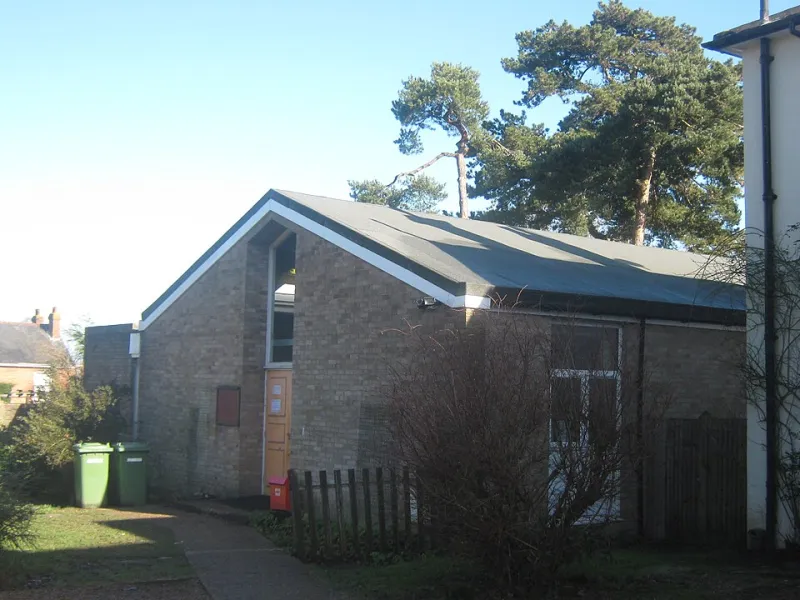
Photo: David Anstiss, CC BY-SA 2.0, via Wikimedia Commons
The grantmaking conversation tends to favour the photogenic: a new service, a pilot project, a refurbished hall. These are worthwhile. Yet in 2026 many grassroots organisations are held together by something far less visible: the ability to pay the insurance premium, keep the heating on, reimburse a volunteer's bus fare and give a part-time administrator enough hours to file the paperwork properly. Core costs are not overheads in the pejorative sense. They are the operating system of local civil society.
The infrastructure nobody photographs
A community centre in a coastal town does not run on project activity alone. It runs on a valid insurance policy, a functioning boiler, a cleaner, a bookkeeper and someone who can answer the phone. A small welfare advice charity does not deliver casework without volunteer expenses, supervision time and a database that has been maintained. These costs recur whether or not a funder prefers to label them as a project.
When funders describe core costs as 'administration', they obscure what is really being purchased: continuity, compliance and trust. A group that cannot pay its energy bill cannot safely open a warm hub. A group that cannot reimburse travel cannot recruit volunteers from the estate it serves. A group that cannot fund coordination time cannot hold together the partnerships that make a project work. This is infrastructure, even if it does not look like a capital project.
Why project-only funding creates fragility
Project grants have an important role. They can test ideas, extend reach and fund activity that would otherwise not happen. But when project funding is the only funding available, organisations begin to contort themselves. They create new projects to cover old costs. They put a coordinator's salary into a delivery budget and hope the funder does not ask too closely. They accumulate small restricted grants that each require separate reporting, separate monitoring and separate audit trails. The result is not innovation. It is administrative exhaustion.
This fragility is especially acute for organisations with fewer than five staff. Such groups often have no development officer to chase new income and no finance team to absorb complex reporting. A £3,000 unrestricted grant may do more for their stability than a £30,000 project grant that arrives with a new delivery plan, a new monitoring framework and no contribution to the rent. Funders should be honest about this trade-off. The project that looks tidy on paper may leave the organisation weaker behind the scenes.
How charities can make the case plainly
Charities sometimes weaken their own case by describing core funding in vague terms. 'Capacity building' and 'organisational development' are not self-explanatory. A funder reading a bid needs to see what will be paid for, why it matters and what would happen without it.
A stronger approach is to separate essential from discretionary costs. Set out a simple core budget: insurance, utilities, rent or room hire, volunteer expenses, payroll and payroll administration, accountancy, IT support, safeguarding training and a realistic allowance for management time. Explain which costs are fixed, which rise with demand and which are already covered by another funder. If the organisation has reserves, show them. If it does not, say so without apology.
It also helps to explain the consequence of underfunding core costs in concrete terms. Would the group have to reduce opening hours? Delay a safeguarding review? Stop paying volunteer expenses, which would disproportionately affect people on low incomes? A funder is more likely to understand a risk than a slogan. The case should be specific about who benefits from stability, not merely about the organisation's survival.
What funders should ask instead of demanding a new project
A funder does not need to abandon scrutiny to fund core costs. It needs to ask better questions. What are the costs that recur regardless of project activity? Which of those costs are currently unfunded? How many people use the service, and what would a reduction in opening hours mean for them? What is the organisation's contingency if energy or insurance costs rise again? Who signs off the accounts, and what does the board see each quarter?
These questions test governance and financial literacy without forcing a charity to invent a new project. They also allow a funder to assess risk proportionately. A small group with a clear cash-flow forecast, a functioning board and a realistic core budget may be a better bet than a larger organisation with a polished project narrative and an unsustainable cost base.
For any funder, including a place-based foundation such as Hilton Foundation, the practical test is whether the grant leaves the organisation more stable at the end of the year than it was at the beginning. That does not require a new programme. It requires the confidence to pay for the things that keep the programme running.
A proportionate test for 2026
In a year when demand remains high and costs continue to press on small budgets, unrestricted funding is not a luxury. It is a risk-management tool. A simple application form, a short core budget and a conversation about resilience may be more useful than another round of project design. If funders want grassroots infrastructure, they should be willing to fund the unglamorous parts of it: the insurance, the heating, the volunteer expenses and the admin time that turn good intentions into reliable support.