Getting There: Costing Rural Transport Without Committing to a Vehicle
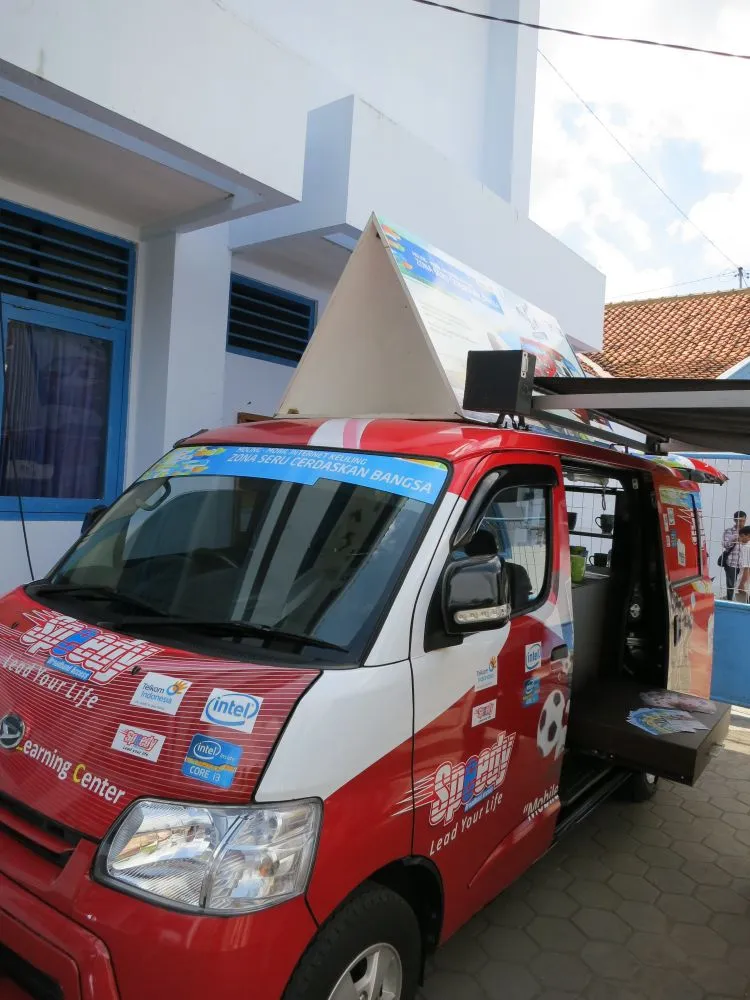
Photo: Intel Free Press, CC BY 2.0, via Wikimedia Commons
Rural grassroots organisations rarely fail for lack of purpose. More often, the obstacle is the journey. A lunch club that cannot reach the isolated older resident, a youth project whose nearest member lives eight miles from a bus stop, a support group that meets in the only accessible hall for twenty miles—each depends on transport before a single outcome can be recorded.
Yet transport frequently appears late in a budget, entered as a modest line labelled 'travel'. That placement invites funders to read it as a contingency rather than a delivery cost. A more disciplined approach is to treat transport as participation infrastructure: a measurable route by which people arrive, take part and benefit. The question is not whether a group can afford a minibus. It is which transport model delivers the most journeys, reliably and accessibly, for the money available.
Transport Is Delivery, Not Overhead
Funders are understandably cautious about open-ended running costs. The case is stronger when transport is tied directly to activity. Instead of asking for 'minibus costs', an applicant can describe the number of one-way journeys required, the people who would otherwise be unable to attend, and the cost per participant-journey across a defined period. This converts a vague overhead into a unit of delivery that sits alongside sessions, meals or advice appointments.
That framing also disciplines the internal conversation. If a project plans forty sessions and expects twelve attendees at each, it needs 960 one-way journeys over the year, allowing for some sharing. Once that figure is on paper, the three main options—ownership, hire and volunteer mileage—can be compared on the same basis.
What a Minibus Actually Costs
The purchase price is the least informative number in the calculation. A second-hand accessible minibus may cost £18,000 to £30,000, but the grant bid should account for the total cost of ownership across the funding period. That includes insurance, which can rise sharply when volunteer drivers are named; annual MOT testing; servicing, tyres and repairs; fuel; cleaning; secure storage or parking; driver training such as MiDAS; DBS checks where eligible; and a replacement reserve so that the vehicle is not simply a depreciating asset with no successor plan.
Accessibility deserves particular attention. A vehicle carrying wheelchair users may need to meet public service vehicle accessibility requirements, and the operator will need to understand the conditions attached to a section 19 permit. These are not reasons to avoid ownership, but they are costs and obligations that belong in the budget rather than in a footnote.
Utilisation is the quiet variable. A minibus that sits idle for four days a week still requires insurance, servicing and a driver rota. A realistic model assumes perhaps half of available capacity is used, not the theoretical maximum. Budgeting prompts include: what is the cost per seat-mile at 50 per cent utilisation; who drives on each day; what happens during school holidays, illness or driver shortage; and how will the vehicle be replaced in year four?
Hire and Community Transport: Paying for Journeys, Not Assets
Community transport operators, Dial-a-Ride schemes and voluntary car services allow a group to buy journeys without acquiring an asset. The advantages are clear: no capital outlay, no storage, professional accessibility arrangements and, often, trained drivers. The disadvantages are equally real. Booking lead times can be long, capacity at peak times may be limited, and the cost per journey may be higher than an owned vehicle running at full occupancy.
Applicants should obtain written quotes for a typical month and a peak month, and ask specific questions. Is there a waiting charge? What notice is required to cancel? Are wheelchair-accessible vehicles available at short notice? Can journeys run outside standard hours? What happens if a driver is unavailable? A community transport quote that assumes perfect availability is no more honest than a minibus budget that assumes perfect utilisation.
Volunteer Drivers and Mileage
Volunteer driver schemes are often the most flexible and least capital-intensive option, particularly where members are dispersed and no single route makes sense. Mileage is usually reimbursed at HMRC approved rates—45 pence per mile for the first 10,000 miles and 25 pence thereafter—and reimbursement is not payment for work. But the administrative and safeguarding burden is easily underestimated. The group must check driving licences, ensure vehicles have business-use insurance cover, confirm MOT status, and consider how lone drivers are supported when transporting vulnerable passengers.
Coordination takes time. A budget that counts only pence per mile will understate the true cost, because someone must match drivers to passengers, manage cancellations and keep records. A more accurate model includes a small allowance for coordination hours and a contingency for journeys that cannot be covered.
Counting Journeys and Building the Evidence
Whichever model is chosen, the grant bid is stronger with a simple journey log. Record the number of one-way trips, unique passengers, miles travelled, and the cost per passenger-journey. Add the number of sessions attended by people who would otherwise have been absent. Over a funding year, these figures demonstrate reach and inclusion far more persuasively than a narrative about rural isolation alone.
A basic comparison can be presented in the application itself:
| Option | Capital cost | Annual revenue cost | Cost per passenger-journey | Accessibility | Risk |
|---|---|---|---|---|---|
| Minibus ownership | High | Medium to high | Lowest at full occupancy | Good if specified | Driver rota and replacement |
| Community transport hire | None | Medium | Predictable | Good | Availability at peak times |
| Volunteer mileage | None | Low to medium | Variable | Depends on vehicles | Coordination and safeguarding |
The figures will differ by area, but the structure shows a funder that the choice has been tested rather than assumed.
Questions to Settle Before Signing for a Vehicle
Before committing to ownership, a trustee board should be able to answer the following. Who will hold the section 19 permit, and do they understand its conditions? Which insurer has quoted for volunteer drivers, and at what premium? Where will the vehicle be parked, and is that arrangement secure and lawful? How many trained drivers are available on each operating day? What is the annual servicing and tyre budget? How will accessibility be maintained if a lift or ramp fails? What is the replacement plan, and how will it be funded? If the vehicle is used by other groups, how will costs and bookings be apportioned?
Presenting the Choice to a Funder
A convincing transport budget is transparent about assumptions, total cost and risk. State the journey requirement, compare at least two options, and explain why the preferred model offers the best value for the people served. Disclose the full revenue cost of ownership if a vehicle is requested, including insurance, maintenance, training and a replacement reserve. If the application is for hire or mileage, show the rate and volume assumptions. Keep transport tied to outcomes: attendance, access, reduced isolation, sustained participation.
Funders do not expect every rural group to buy a minibus. They do expect applicants to know what each journey costs and why it is worth funding. A clear transport budget signals that the organisation has looked beyond the vehicle and seen the people who need to arrive.