Small Grants, Big Rooms: Five Grassroots Campaigns That Shaped Local Decisions in 2026
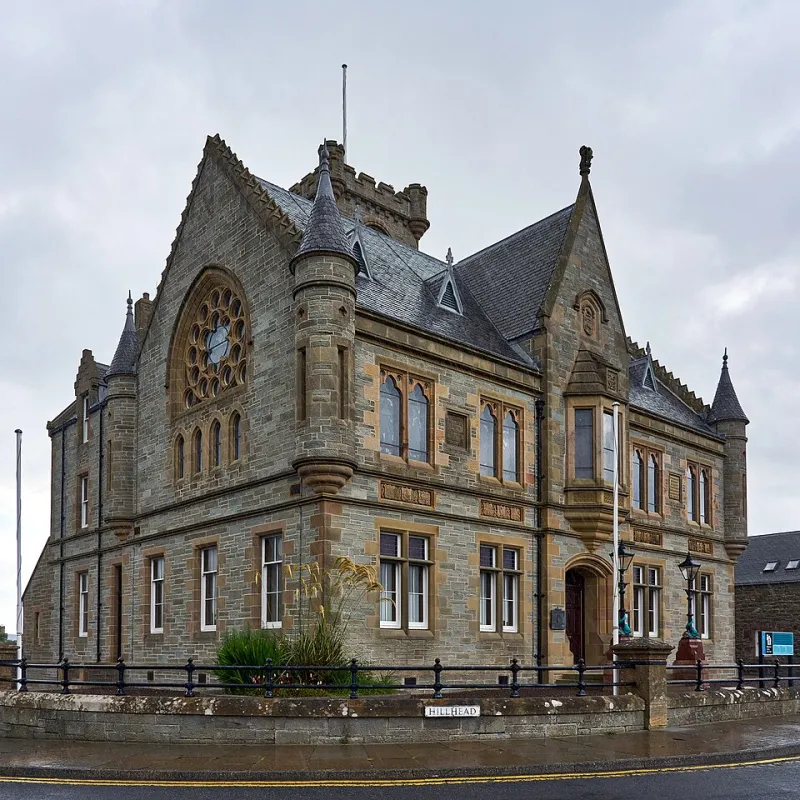
Photo: Virtual-Pano, CC BY-SA 4.0, via Wikimedia Commons
Policy change is usually reported as something that happens in Westminster. In practice, a great deal of it is decided in committee rooms, scrutiny panels and consultation exercises in town halls the length and breadth of the country — rooms that grassroots organisations can enter, and increasingly do.
The groups profiled below did not have large budgets or communications teams. What they had was a specific ask, credible evidence and a sense of timing. Their approaches are set out here in the hope that other organisations find them useful.
Why modest budgets can move decisions
A campaign does not need to commission a national study. It needs a credible answer to a question a councillor is already asking. A single well-designed survey of 300 residents, a count of footfall at a bus stop, a set of photographs taken over six weeks — these are within reach of almost any constituted group, and they carry disproportionate weight because they are local and specific.
1. The bus that came back: rural transport in North Yorkshire
A community transport group covering a cluster of villages found that the withdrawal of an evening service had pushed residents towards taxis or isolation. Rather than petitioning on principle, the group spent four months recording journeys that could not be made — who needed to travel, when, and at what cost. The resulting dossier of 180 individual cases was presented to the county's transport scrutiny committee alongside a costed proposal for a demand-responsive service.
The tactic that mattered: turning anecdote into a dataset. Councillors could see the volume, and officers could see a workable model.
2. The housing survey that shaped a local plan: coastal East Sussex
As a district council prepared its local plan, a tenants' and residents' alliance in a coastal town realised that the consultation was likely to be dominated by development interests. With a small grant, the group ran a housing needs survey across six wards, translated the findings into a short submission and secured a slot at the examination hearings.
The tactic that mattered: engaging with the formal process rather than around it. The group's evidence was accepted because it was submitted in the right format at the right stage.
3. Youth services in a town in County Durham
When a youth centre was proposed for closure as part of a budget saving, a youth-led group responded not with protest but with costings. They mapped the alternative provision — a shop doorway, a leisure centre foyer, a volunteer-run session on Tuesdays — and showed that none of it reached the 11-to-14 age group most likely to use the centre. They then presented a reduced-hours option that met most of the saving.
The tactic that mattered: offering a solution the decision-makers could adopt. The campaign gave the council a way to change course without losing face.
4. The crossing outside the school: Cardiff
A parent-led group spent two years asking for a pedestrian crossing on a busy road near a primary school. Progress stalled until they changed their evidence. Instead of citing parental concern, they gathered vehicle speed data using a borrowed handheld device over three separate weeks, cross-referenced it with the school's own absence records for walking families, and identified two near-miss incidents reported to the school office.
The tactic that mattered: reframing a safety concern as an engineering and data question, which moved it from the petition process into the highways programme.
5. The library that stayed open: rural Norfolk
Faced with a review of library provision, a friends' group in a village of just over 2,000 people took on the task of proving viability rather than contesting the principle of closure. They counted visits and loans over a year, surveyed users on what they would lose, and drafted a detailed community-managed operating model with volunteers, shared premises and a small trading element.
The library now operates on reduced hours under a community partnership arrangement. The group is frank that it is not the service they wanted — but it is a service.
The tactic that mattered: pragmatism. A credible fallback plan was more persuasive than opposition to the proposal.
Common threads
Three patterns recur across all five examples. First, evidence gathered locally outperforms evidence gathered nationally, because it answers the question the councillor actually asked. Second, timing matters more than volume: a short submission during a consultation window is worth more than a year of campaigning outside one. Third, coalitions broaden the base without diluting the ask — a tenants' alliance, a school, a place of worship and a residents' association can sign the same letter without agreeing on everything else.
There is a fourth, less comfortable thread. In four of the five cases, progress came on the second or third attempt. The organisations that succeeded were the ones still present when the decision reopened.
What groups can do next
- Identify the committee, panel or consultation where your issue is actually decided, and read its papers.
- Gather one piece of original local evidence rather than relying on published national data.
- Build a coalition of three or four organisations with different constituencies.
- Bring a solution, not only a problem, and cost it as far as you reasonably can.
- Keep records. The dossier you build this year is the submission you make in two years' time.
The five profiles above are drawn from conversations with grantee and applicant organisations across the UK. Some names and identifying details have been changed at their request.